
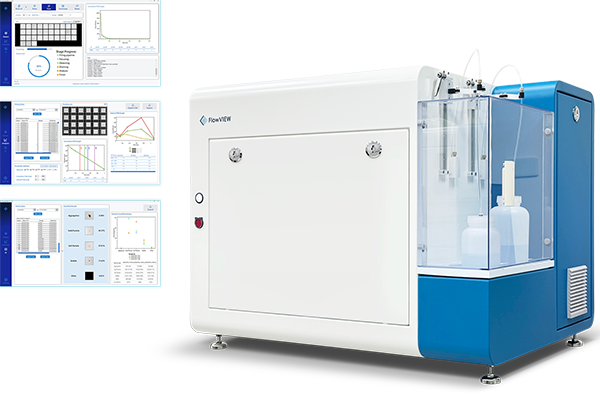
Overcoming the limitations of conventional detection technologies, with particle detection capabilities down to 10 nm across a 10–500 nm size range, providing visual particle images and quantitative analysis data.
Supports particle analysis in various process chemicals, including strong acids, strong oxidizing agents (such as H₂SO₄ and H₂O₂), etchants, and TMAH at specified concentrations. Enables monitoring of microcontamination changes to improve process stability.
Utilizes AI-based image analysis to identify four major microcontamination categories: Solid, Soft, Aggregation, and Bubble. Enables rapid identification of particle abnormalities and potential contamination sources.
Features an exclusively designed quartz flow cell with excellent chemical resistance and high optical transmittance, enhancing image acquisition quality and long-term system stability.
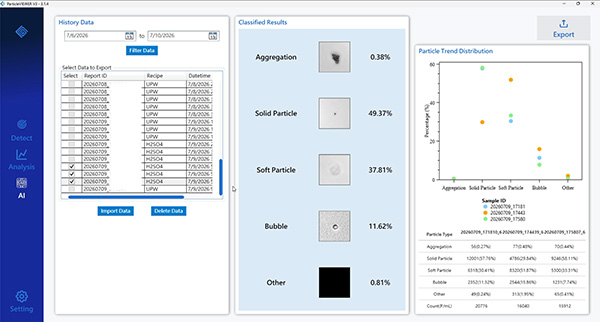
AI-powered particle recognition goes beyond the limitations of conventional particle counting by automatically identifying four categories based on particle morphology: Solid Particle, Soft Particle, Aggregation, and Bubble.
Through AI-driven classification, statistical analysis, and visualization, engineers gain deeper insights into contamination composition and abnormal variations, enabling more informed process quality assessments.

Particles / Aggregates / Bubbles

Particle Size and Contamination Composition

Liquid Quality
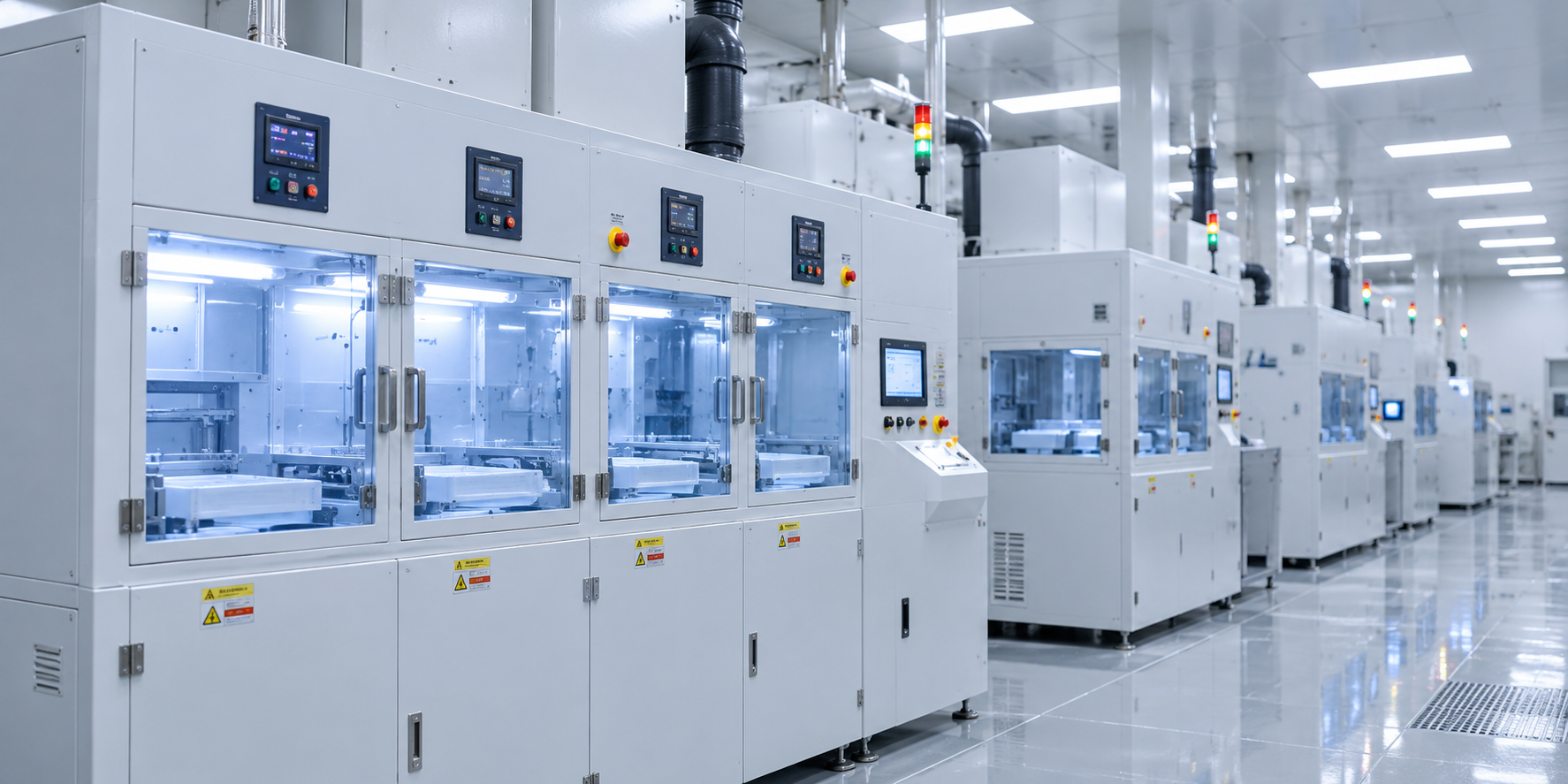
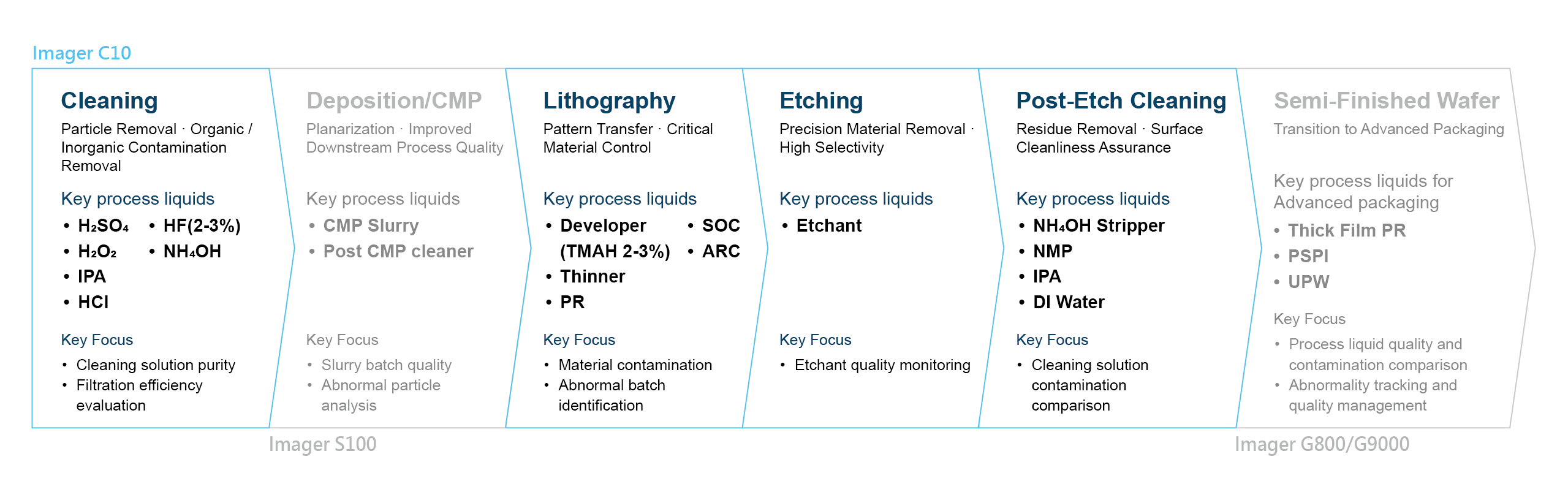
The Imager C10 is designed to meet the stringent cleanliness requirements of advanced semiconductor manufacturing. With liquid particle detection capabilities down to 10 nm, it supports the analysis of liquid materials used in critical processes, including wafer cleaning, lithography, etching, and post-etch cleaning. It helps engineers identify and monitor microcontamination risks in process chemicals and cleaning solutions.
By integrating AI-powered image recognition with particle morphology classification, the Imager C10 transforms particle size, count, and contamination characteristics into quantifiable analytical data. This improves abnormality detection and analysis efficiency while reducing the workload associated with inspection and quality management.
The system also supports chemical quality monitoring and material usage decisions, helping minimize unnecessary material consumption, improve process stability, and optimize resource efficiency.
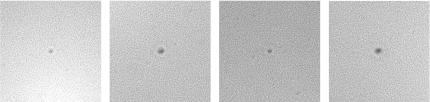
Analyzes the size and morphological characteristics of solid particles.
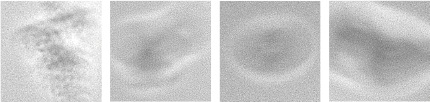
Visualizes abnormal particle morphologies, including gel-like and translucent particles.
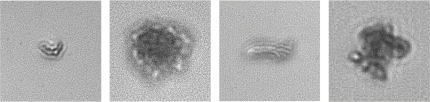
Identifies structures formed by clustered particles to support particle aggregation analysis.
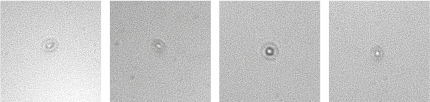
Distinguishes bubbles from solid particles through image-based analysis, reducing the risk of false identification of abnormal signals.
| Model |
Imager C10
|
|---|---|
| Applicable Material | Chemical |
| Particle Size Range |
0.01μm-0.5μm
|
| Viscosity (Recommended) | <20 cP |
| pH Value | 1-13 |
| Detectable Material | DME(CH₃OCH₃)、BDO(C₄H₁₀O₂)、Mixed Organic Acids、IPA、H₂O₂、NH₃ |
| Type | Offline / Online |
| AI Classification Types | Solid Particle, Soft Particle, Aggregation, Bubble |
| Communication Interface | USB 3.2 |
| Types of Measurement Data |
Counts / Length / Roundness / Particle Size Distribution (PSD) Chart / Particle Images
|
| Overall Dimensions |
800L x 657W x 666H mm (±5mm)
|
| Weight |
55 kg (±2kg)
|
The Imager C10 has a specified particle size detection range of 10–500 nm (0.01–0.5 μm), enabling nanoscale particle analysis in semiconductor process chemicals. Actual measurement performance depends on sample conditions.
The system integrates AI-powered image analysis to classify particles into four categories: Solid Particle, Soft Particle, Aggregation, and Bubble. This helps engineers analyze particle morphology and contamination characteristics.
The Imager C10 is suitable for process chemicals with confirmed compatibility, including IPA, H₂O₂, ammonia solutions, and certain organic acids. Chemical concentration, temperature, and material compatibility must be evaluated for each application.
Traditional liquid particle counters primarily provide particle count and size information. The Imager C10 goes further by combining particle imaging with AI-powered morphology classification, helping engineers distinguish different contamination characteristics. Actual performance differences depend on the measurement technology and sample conditions.
The Imager C10 is available in both Offline and Online measurement configurations. Implementation methods, sampling configurations, and system integration requirements should be evaluated by the FlowVIEW technical team based on specific process conditions.


